
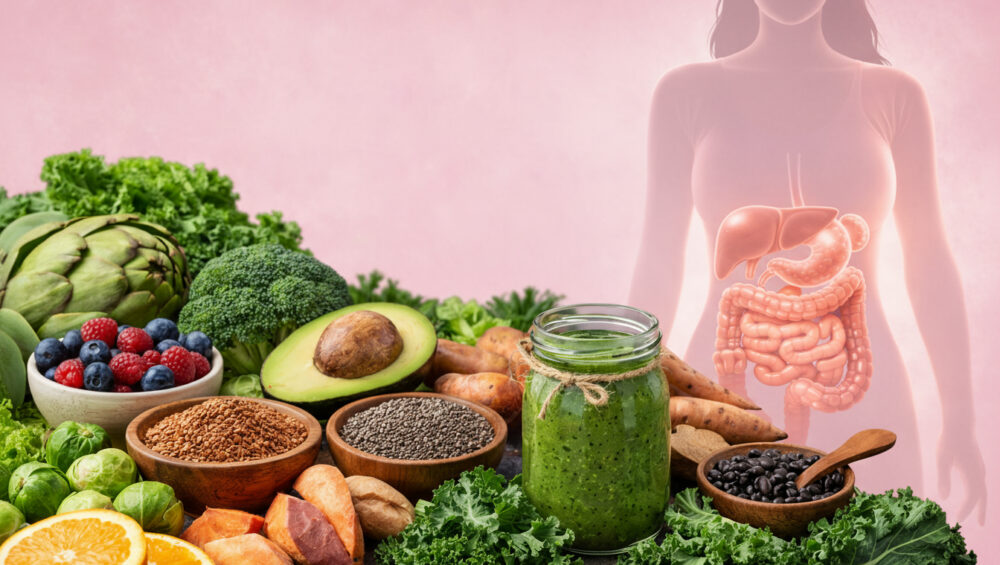
If you’ve been dealing with PMS, PMDD, heavy or irregular periods, stubborn belly weight, mood swings, breast tenderness, or that “wired but tired” feeling, there’s a good chance estrogen metabolism is part of the story. And one of the most overlooked tools for supporting healthy estrogen balance is fiber. I know. Fiber doesn’t sound glamorous. But when it comes to hormones, especially estrogen, fiber is one of the most powerful, foundational levers we have. I see this every single week in practice. Let’s talk about why fibre matters, how it supports estrogen metabolism, and what happens when you don’t get enough.
Estrogen Has to Leave the Body
Estrogen doesn’t just magically disappear after your body uses it. Once estrogen has done its job, it needs to be metabolized and eliminated. This process happens primarily through the liver and the gut.
Here’s the simplified version:
• Estrogen is processed in the liver
• It is packaged for elimination
• It gets sent into the gut via bile
• It must be excreted through the stool
This is where fiber becomes critical. Fiber acts like a binding agent in the gut. It grabs onto estrogen and helps escort it out of the body. Without enough fiber, estrogen can get reabsorbed back into circulation, driving symptoms of estrogen dominance. This reabsorption process is one of the most common root causes I see behind PMS, PMDD, fibroids, endometriosis, PCOS, heavy cycles, and mood instability.
The Gut-Estrogen Connection
There’s a group of gut bacteria known as the estrobolome. Its job is to regulate how estrogen is metabolized and eliminated. When the gut is healthy and fiber intake is adequate, the estrobolome works in your favor. When the gut is inflamed, sluggish, or dysregulated, especially with low fiber intake, things go sideways. Certain gut bacteria produce an enzyme called beta-glucuronidase. This enzyme can “unpack” estrogen that was already destined for elimination and send it right back into circulation. High beta-glucuronidase activity plus low fiber equals estrogen dominance. I see this pattern constantly in women who are doing “all the right things” but still struggling with hormone symptoms.
Constipation Is a Hormone Problem
If you are not having at least one well-formed bowel movement per day, estrogen is likely recirculating. Constipation isn’t just a digestive issue. It’s a hormone issue. Every day estrogen sits in the gut without being eliminated is another day it has the opportunity to be reabsorbed. This is one reason women with slow digestion often experience:
• Worsening PMS
• Bloating before periods
• Breast tenderness
• Acne along the jawline
• Mood swings
• Heavy or painful cycles
Fiber improves stool bulk, gut motility, and transit time. Faster transit means less estrogen recirculation.
Fiber Also Supports Blood Sugar and Cortisol
Estrogen metabolism does not exist in isolation. Blood sugar and cortisol play major roles here.
Fiber slows glucose absorption, stabilizes blood sugar, and reduces insulin spikes. Stable blood sugar means lower cortisol output. High cortisol shifts estrogen metabolism down less favorable pathways in the liver. This is one reason chronic stress and low fiber intake often show up together in women with estrogen dominance.
When you increase fiber, you support:
• Estrogen clearance
• Blood sugar stability
• Cortisol regulation
• Gut microbiome diversity
This is why fiber is a non-negotiable foundation, not an optional add-on.
How Much Fiber Do Women Actually Need
Most women are getting less than half of what their body needs. In practice, I see many women hovering around 10 to 15 grams per day. That’s simply not enough to support hormone health. A realistic target for most women is 25 to 35 grams of fiber per day, coming from whole foods. This does not mean eating a giant bowl of bran cereal. It means consistently including fiber-rich foods across meals.
Best Fiber Sources for Estrogen Balance
Not all fiber is created equal. I like a mix of soluble and insoluble fiber to support both gut health and elimination.
Some of my favorites:
• Ground flaxseed
• Chia seeds
• Lentils and beans
• Berries
• Avocado
• Artichokes
• Brussels sprouts
• Broccoli
• Leafy greens
• Sweet potatoes
Flaxseed deserves a special mention here. It contains lignans, which support healthy estrogen metabolism and have been shown to reduce estrogen reabsorption.
Start low and build slowly if fiber hasn’t been part of your routine. Jumping from low fiber to high fiber overnight can cause bloating and discomfort.
Fiber Supplements
Food always comes first. But for some women, especially those healing gut dysfunction, fiber supplements can be helpful. I often use gentle options like partially hydrolyzed guar gum, psyllium husk, or acacia fiber, depending on the person. This is very individualized. More fiber is not always better if the gut is inflamed or infected. This is why testing matters.
Frequenty Asked Questions
Most women benefit from 25 to 35 grams per day, depending on body size, gut health, and activity level.
Fiber does not lower estrogen production. It helps remove excess estrogen, supporting healthy balance.
Yes. Estrogen becomes more erratic during perimenopause, making proper elimination even more important.
Yes. By supporting estrogen clearance and blood sugar stability, fiber can reduce symptom severity.
This often indicates gut imbalance or increasing fiber too quickly. Go slow and address gut health if symptoms persist.
The Bottom Line
If estrogen dominance is part of your hormone picture, fiber is not optional.
Fiber helps estrogen leave the body.
Fiber supports the gut.
Fiber stabilizes blood sugar.
Fiber lowers cortisol.
You can take all the supplements in the world, but if estrogen isn’t exiting properly, symptoms will persist. If you’re struggling with hormone imbalance and feel like you’ve tried everything, look at your fiber intake. It’s often the missing piece.
Don’t forget to explore more of my blog posts and reach out if you have any questions.